

As a colleague, I assume you treat musculoskeletal pain like I do. You also consider the body as a whole. You know and understand that if the hip does not function properly, the knee begins to hurt. And you, like me, use the connections between the hip, knee, and ankle to resolve this knee pain.
In this example, the hip-knee-ankle relationships are crucial for alleviating discomfort. Regrettably, they aren't taught.
Traditional anatomy, although fascinating, is not very practical. Like I mentioned previously, its purpose is to study the structure of the human body; it isn’t made to help soft tissue therapists resolve musculoskeletal pain.
Although a basic level of topographical and structural anatomical knowledge is desirable, we cannot help our clients without a comprehensive understanding of soft tissue therapy anatomy. We need to understand which skin, muscles, and joints relate to which motion and to each other.

To help our clients live their happiest, healthiest, and pain-free lives, a whole-body approach is essential.
Holistic, whole-body, soft tissue therapy anatomy is a must.
Thomas Myers’ “Anatomy Trains” is an example of this kind of anatomy. It shows the body as a whole by illustrating several different ways the extremities and core interconnect. In it, connective tissues or deep fasciae are the glue that bind muscles, bones, and ligaments. It is practical and easy to use.
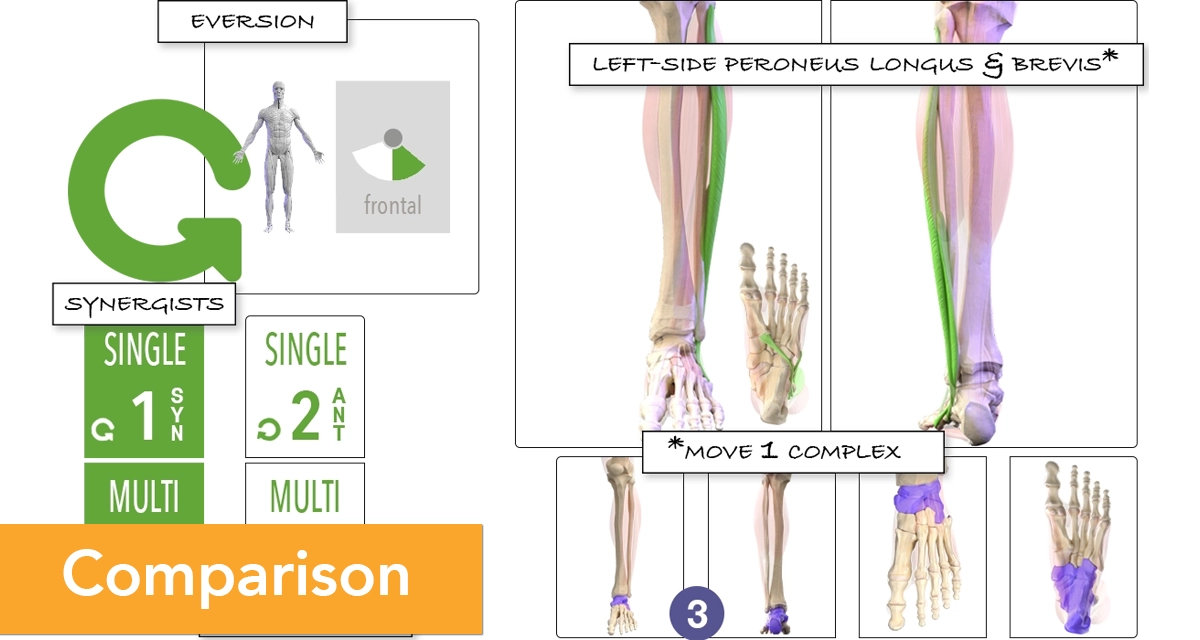
In "Anatomy by Planes," I introduce a different yet equally significant approach—one that is centered on motion. By focusing on movement, we can unlock deeper insights and more effectively treat our clients' musculoskeletal pain, especially the pain experienced during physical activity.